
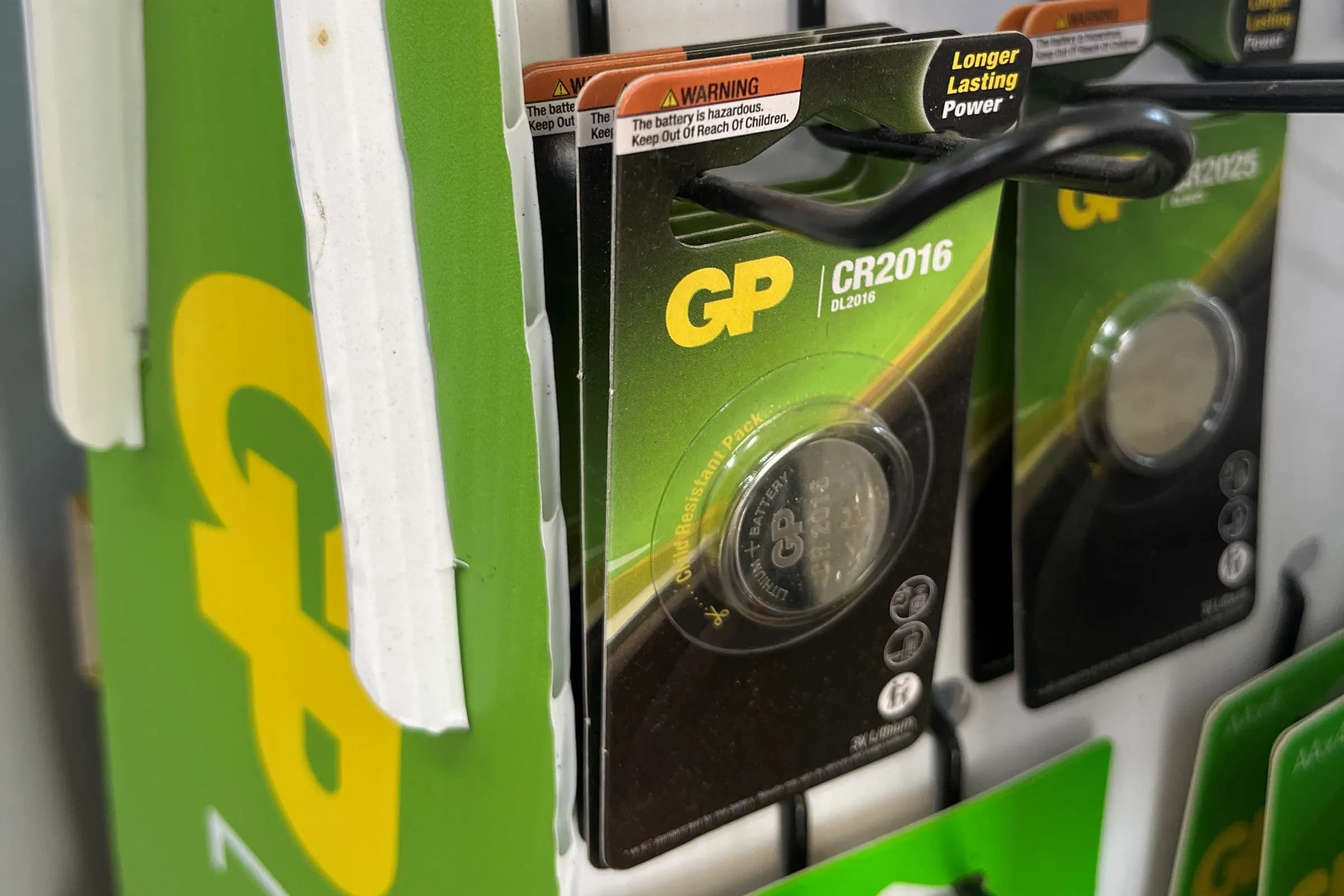
GP Batteries. Household batteries in Townsville and Cairns.
GP is the household battery range we keep on the shelf at both branches. GP Ultra Alkaline in AA, AAA, C, D and 9V, lithium coin cells in the four common sizes, and GP Discovery headlamps and torches. Bring the old battery in and we can read the size straight off it — and if it came out of a car key remote, we'll fit the new one for you.
Batteries are already what we do — car, 4WD, deep cycle, lithium and golf cart. GP covers the small end of that. So while you're in about the ute, the 9V for the smoke alarm and the coin cell for the car key can come home with you too.
The GP range.
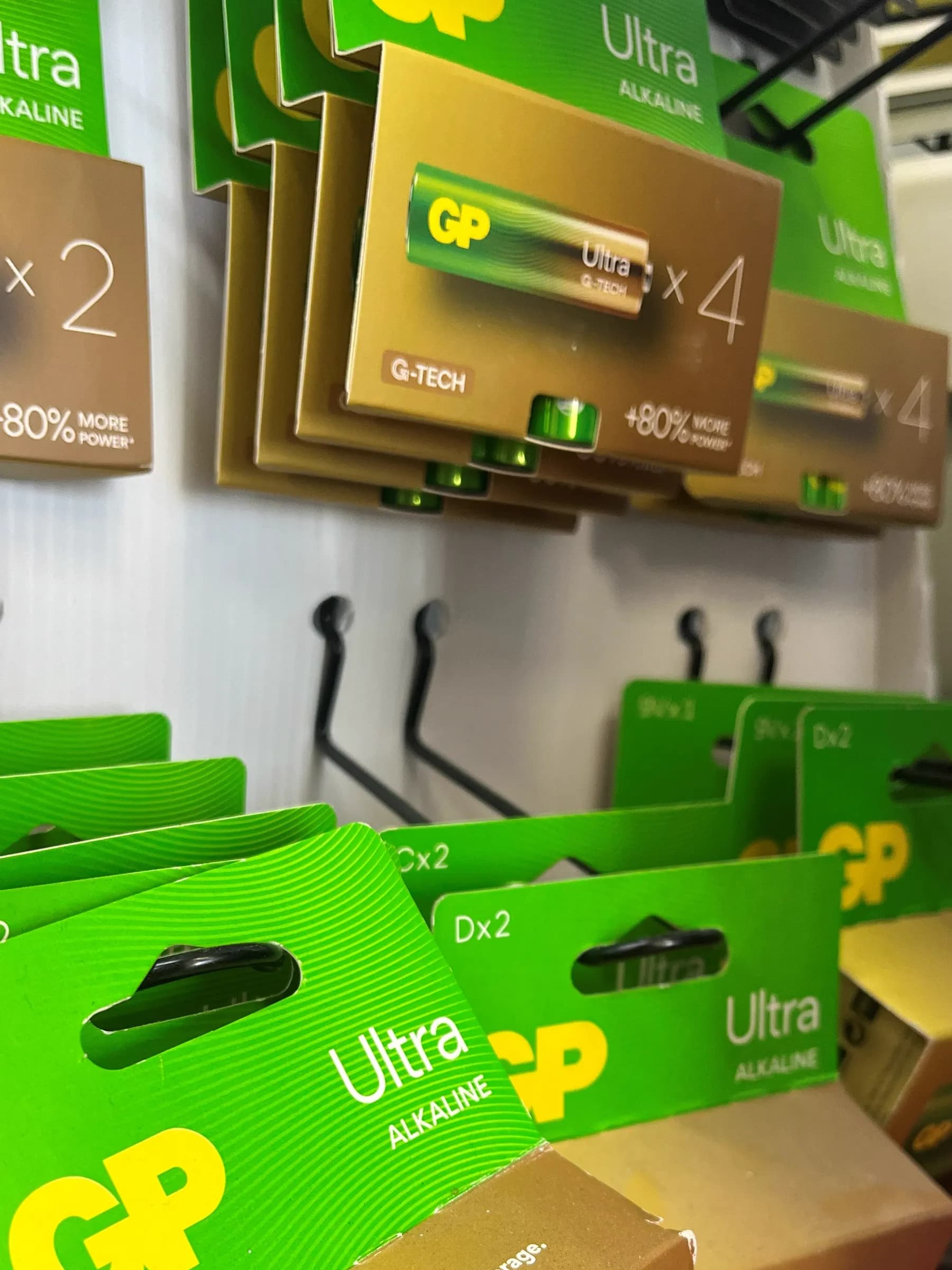
GP Ultra Alkaline — AA, AAA, C, D and 9V
The everyday sizes, in carded packs. GP build the Ultra range around what they call G-TECH, including a patented nylon sealing ring designed to stop the cell leaking in storage — which is what ruins a torch that sat in a drawer until the power went out.
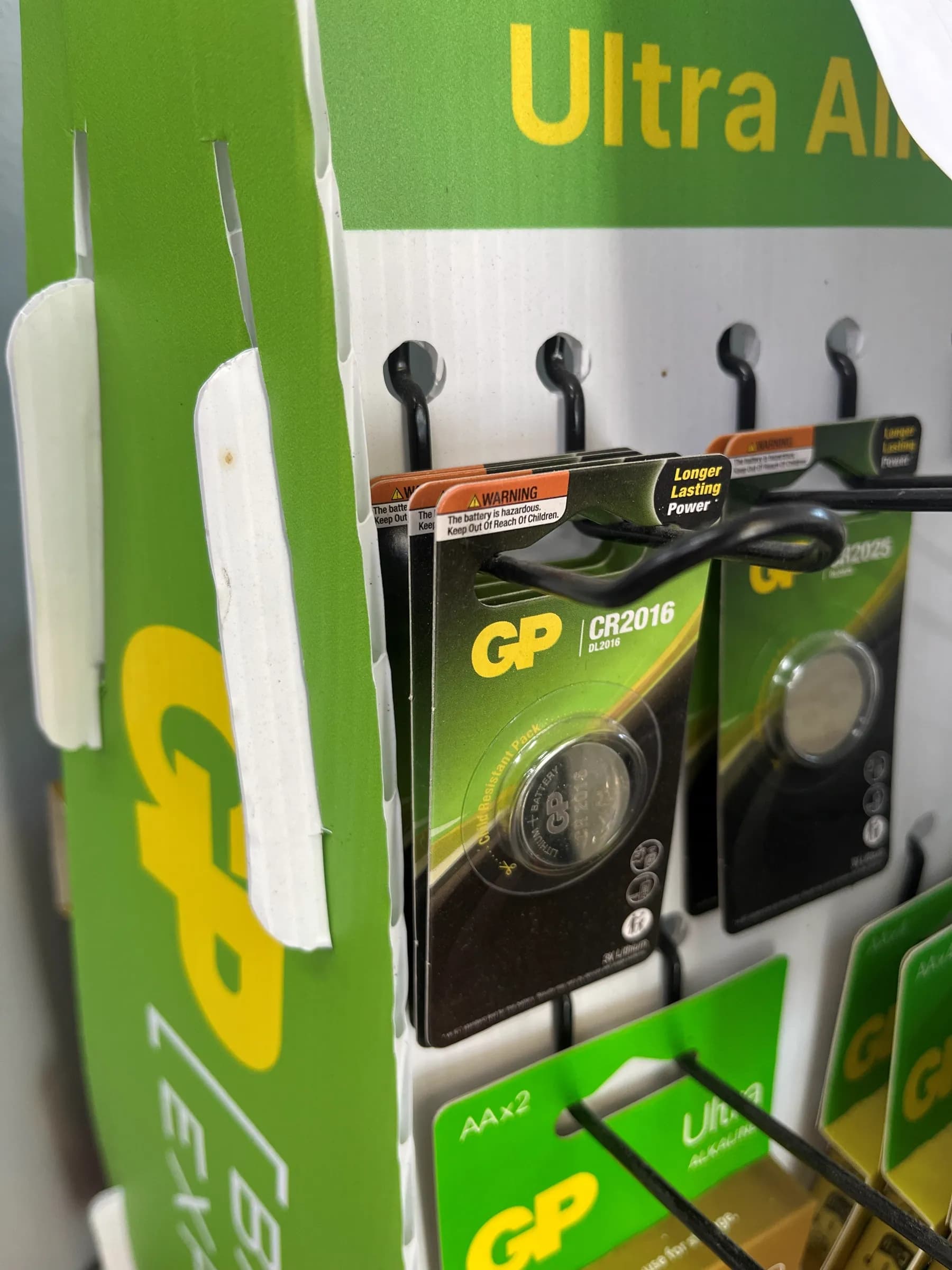
GP lithium coin cells — CR2016, CR2025, CR2032, CR2450
The flat 3V cells in car keys, remotes, smart watches, glucose monitors and door and window sensors. GP quote a shelf life of up to 10 years stored cool and dry, and an operating range of −20°C to +60°C.
GP Discovery headlamps
Two models, both on 3 x AAA. The CH44 is the 300-lumen one, with a motion sensor, six light modes including red, and GP's published 60m beam and IPX4 water resistance. The CH42 is the simpler 110-lumen headlamp — one button, three brightness levels and a 40m beam by GP's figures.
GP Discovery LED torch
A compact aluminium torch on 3 x AAA, with a beam that zooms from flood to spot, an SOS mode and IPX4 water resistance. GP publish a 100m beam and a 15-hour runtime.
On the shelf, in Townsville.
Photographed on the GP display at the Garbutt workshop. The size is printed on every card, so it is quick to match against the battery you brought in.
The honest take.
This is a convenience range, and it is worth being plain about that. We carry GP in the common household sizes rather than every battery made. If the device takes something unusual, read the code off the old cell before you ring, or bring it in, and we'll tell you straight whether it's one we have. For anything that starts an engine or runs a fridge in the back of a ute, that's the other end of the shop.
Shop the categories.


Household batteries, answered.
Which coin battery does my car key take?+
Will you fit my car key remote battery?+
Do you have GP batteries in Cairns?+
What batteries do GP Discovery headlamps and torches take?+
How long do GP lithium coin cells last on the shelf?+
Are button and coin batteries dangerous for children?+
Bring the key in. We'll fit the cell.