
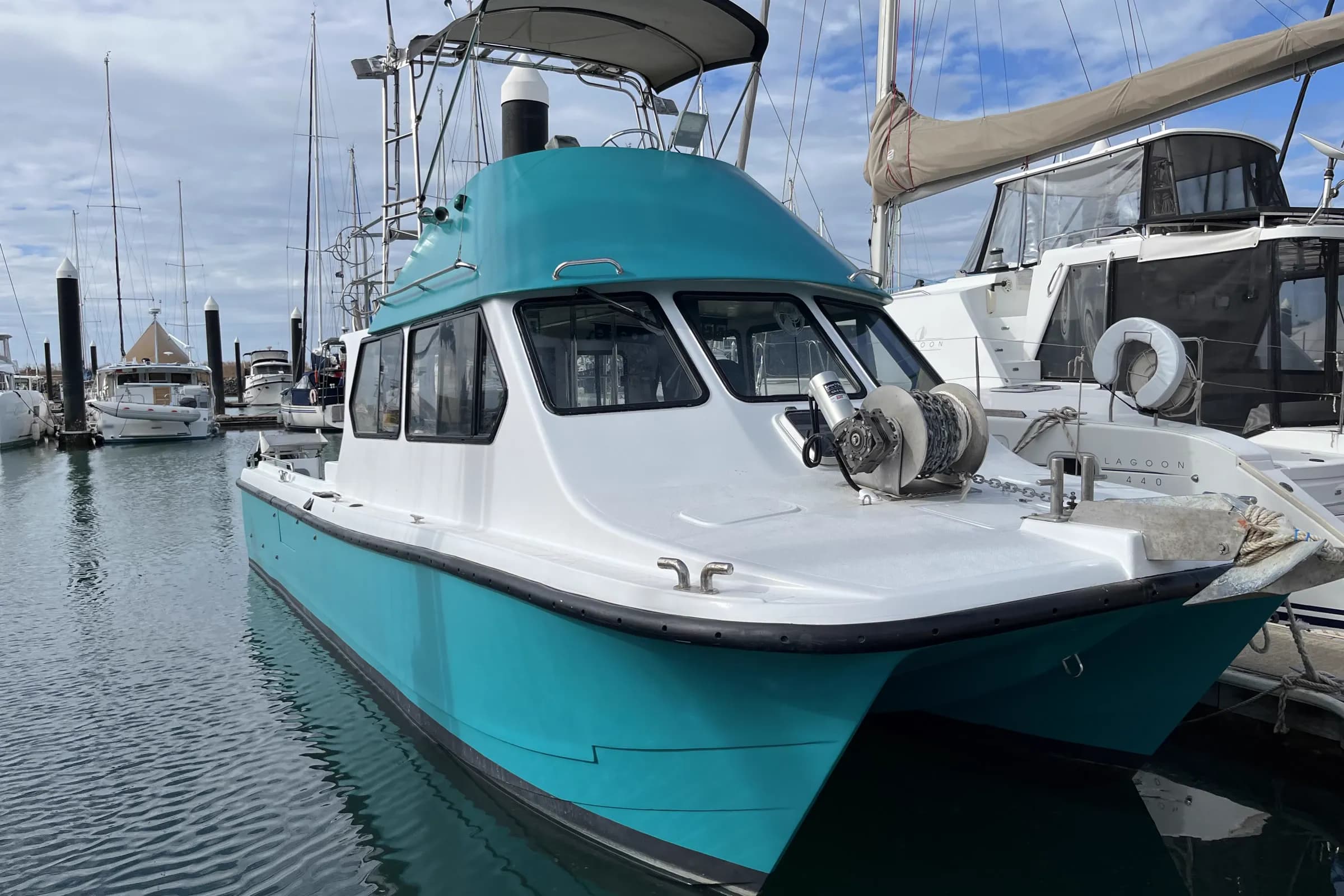
Marine electrical and boat wiring, Townsville.
Saltwater hates electronics. Standard automotive parts don't last. We wire everything from creek boats and trailer rigs up to commercial vessels — proper marine-grade tinned cable, sealed connectors, fused systems and battery isolators that won't seize after a season.
- Marine-grade tinned cable as standard
- Sealed Deutsch / Anderson connections in critical paths
- Dual & triple battery setups with proper isolators
- Compliant nav lighting install
The work, in detail.
Creek boats and trailer rigs
Tinnies and runabouts as much as bigger trailer boats — lights, livewell, sounder, bilge, deck wash and dual battery. A small boat gets the same tinned cable and sealed joints as a big one, because it sits in the same water.
Dual & triple battery systems
Cranking + house + electronics. Victron BMS, DCDC chargers, smart isolators. Solar integration where it makes sense.
Navigation & deck lighting
Compliant nav lights, deck floods, underwater LED, courtesy lighting. Marine-spec, properly sealed.
Electronics install
Sounders, plotters, radios, AIS. Clean install, proper cable runs, supplied wiring spec by manufacturer.
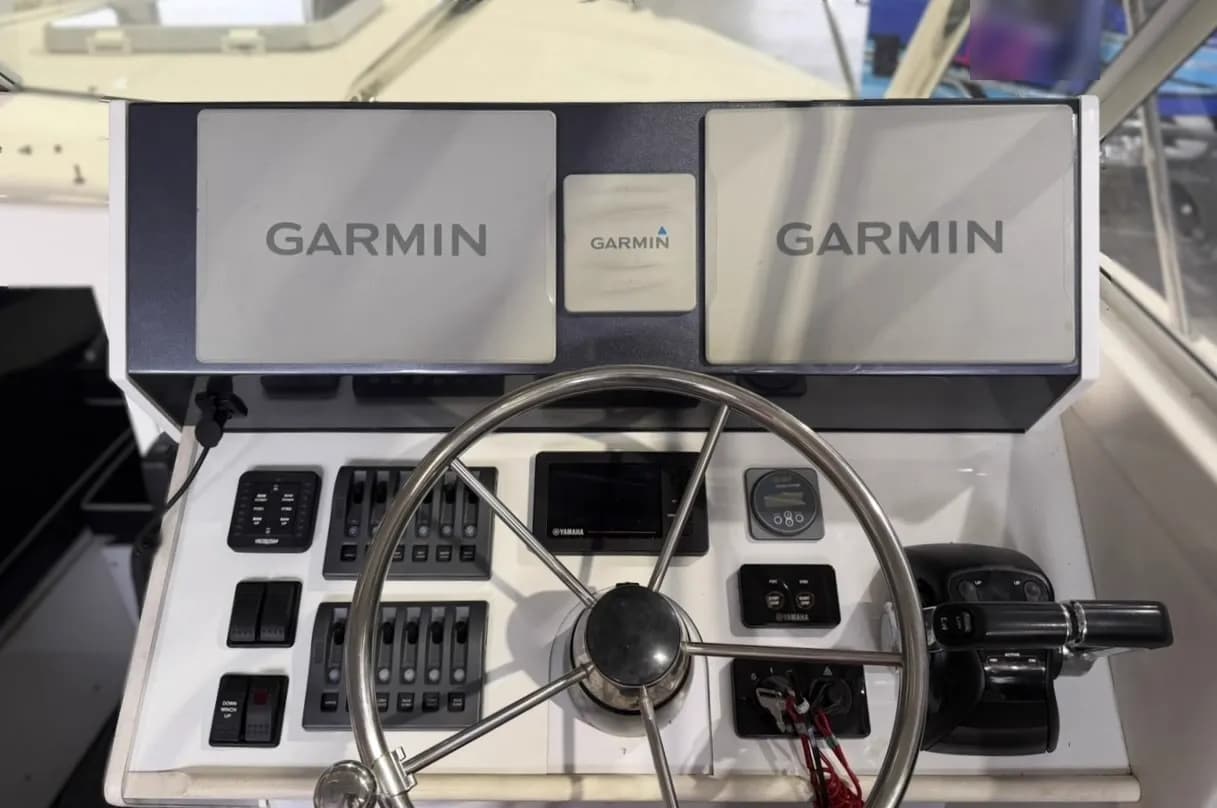
Twin plotters, one clean helm.
Two Garmin displays across the top of the dash with a third unit between them, covers on, sitting above a stainless wheel.
Either side of it, the switch banks — a rocker marked down and up for the winch, rows of labelled switches to port, and the Yamaha gauges and binnacle control to starboard.
The screens are the easy part. What decides whether a helm still works in five years is behind the dash: the supply to each unit, the earths, and whether the runs were made so they can be got at again.
Marine and deep cycle batteriesThe same console, twice.
One boat, one console cavity, photographed on the way in and again on the way out. Look for the NAC-3 autopilot computer and the master switch label — they are in the same place in both, which is the only way to read a before-and-after honestly.
Different boats, different jobs.
A commercial trawler alongside, a cabin boat out of the water, a trailer rig in for wiring, and the switching, panels and helm work that goes into them. Townlec's own photographs — no catalogue renders, no stock.
Signs the wiring is letting go.
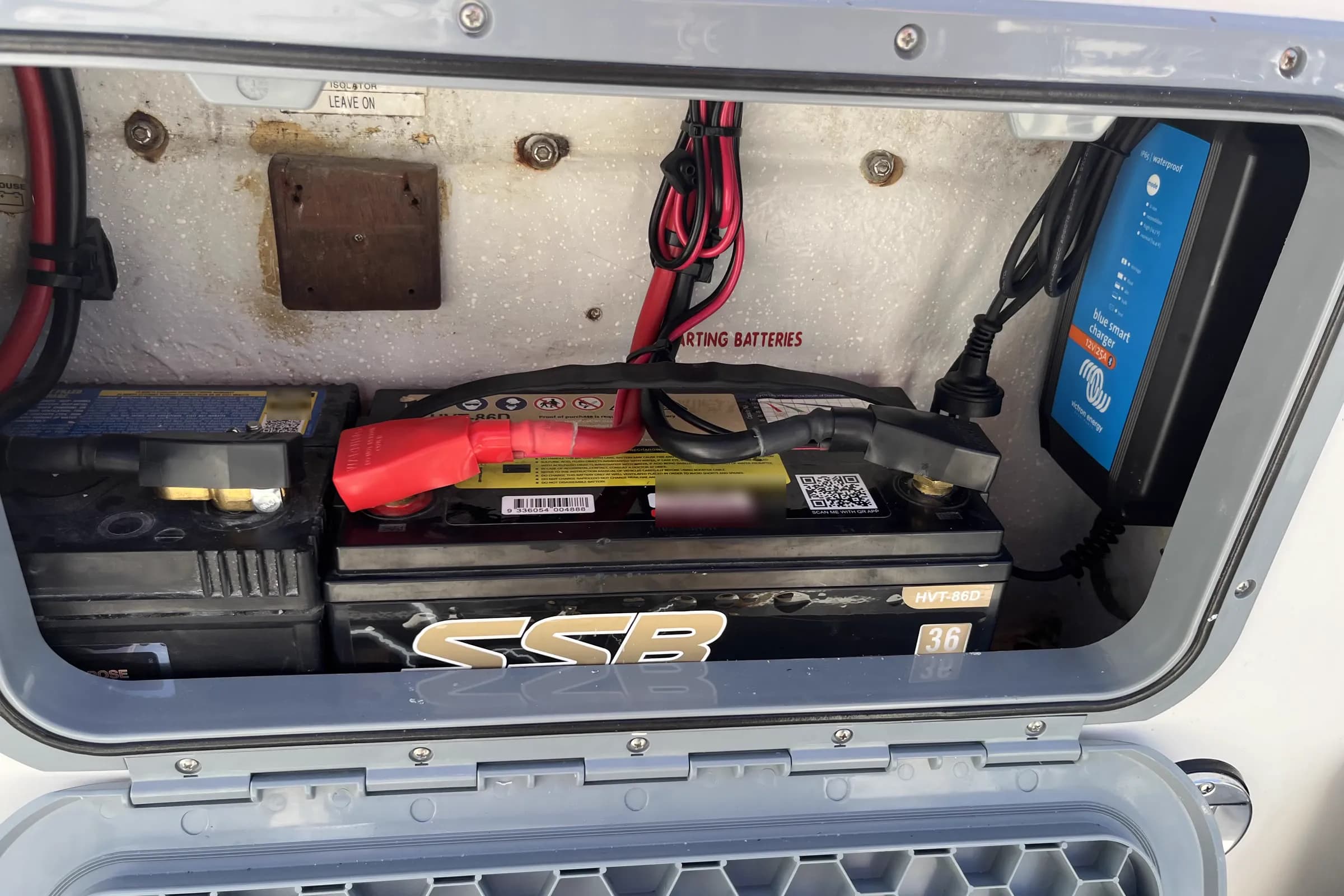
Saltwater does not fail things all at once. It works down a wire under the insulation, and the first sign is usually something small and intermittent that gets blamed on the unit it is feeding.
- Nav lights flicker, or one circuit works and the next does not
- The sounder or plotter drops out when the engine cranks
- Green or white crust on terminals, crimps and connector pins
- The bilge pump runs when it should not, or stays quiet when it should not
- Batteries flat after a weekend on the mooring
- The VHF transmits poorly, or picks up engine noise
- Breakers trip under load, or the same fuse keeps going
- Repairs done with automotive crimps and electrical tape
Recognise a few of those? Bring it in and we'll test it.
Why boats come to an auto electrician.
We diagnose before replacing
A sounder that drops out is not automatically a dead sounder. It is as likely to be the supply, the earth or a connector behind it, and swapping the unit fixes nothing if it is.
Creek boats to commercial vessels
The same trade, at different scale — tinnies and runabouts through to trailer rigs and commercial fishing boats alongside at the wharf.
The electronics you already run
Lowrance, Garmin, Simrad and GME are what we work behind day to day — plotters, sounders, autopilot computers and VHF.
Charging, not just batteries
Cranking and house banks, isolators, voltage-sensitive relays and DC-DC charging. A boat that flattens its batteries every weekend usually has a charging problem, not a battery problem.
Circuits you can read
Switch panels labelled for what they actually do — wash down, live well, bilge, deck lights, nav and anchor — so the next person is not guessing at three in the morning.
Auto electricians first
The same people who chase intermittent faults, parasitic drains and charging problems on trucks and machinery. Salt makes it harder; it does not make it a different trade.
- Victron
- Anderson
- Hella Marine
Stocked for the job.
Full catalogue →
Marine work along the coast.
Boats come to the Townsville workshop from a long way up and down the coast — Airlie Beach and the Whitsundays, Bowen, and the Burdekin at Ayr, Alva Beach and Cungulla to the south; Magnetic Island across the water; and north through Ingham and Lucinda, Cardwell, Mission Beach and on towards Cairns. Ring us with the boat and where it is and we will work out the best way to do the job. The truck, machinery and fleet side is in the same building, so if it turns out to be batteries or charging rather than wiring, it is the same people either way.
Marine questions, answered.
Can you work on bigger commercial vessels?+
Do you carry Victron stock?+
What makes marine wiring different from automotive?+
Why do my boat batteries keep going flat?+
Can you install a sounder or plotter I have already bought?+
Can you set up a dual battery system on my boat?+
Do you do navigation and deck lighting?+
Where does the work get done?+
I am not in Townsville — can you still do my boat?+
Saltwater finds every shortcut in a wiring job. Let's not leave it any.